
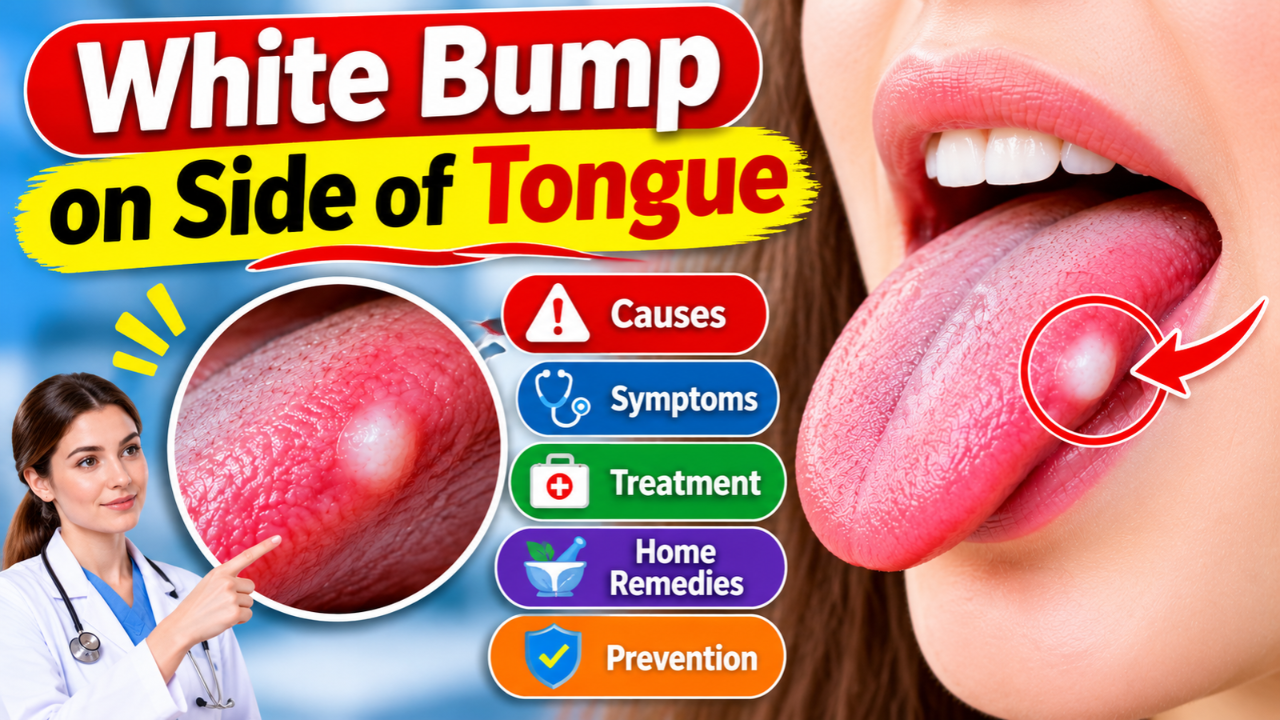
Noticing a white bump on the side of your tongue can be uncomfortable and sometimes worrying. You might discover it while brushing your teeth, eating, or simply looking inside your mouth. Some bumps are painful, while others appear without causing any noticeable discomfort.
The good news is that many small white bumps on the tongue are caused by minor irritation, inflamed taste buds, mouth ulcers, or white bump on side of tongue temporary infections. They often improve without complicated treatment. However, a persistent bump, particularly one that changes in appearance or becomes hard, should not be ignored.
Understanding the possible reasons behind a white bump on the side of the tongue can help you decide what to do next. This guide explains common causes, symptoms, treatment options, prevention tips, and warning signs that may require professional attention.
What Is a White Bump on the Side of the Tongue?
A white bump on the side of the tongue is a small raised area, spot, or lesion that appears along one or both edges of the tongue. It may look like a tiny white pimple, a raised patch, or a small sore.
The tongue naturally contains tiny structures called papillae. These structures help us taste food and provide the tongue with its familiar textured appearance. Sometimes, papillae become irritated or swollen, making them look like small white or reddish bumps.
Other bumps may develop because of accidental biting, hot food, infections, or irritation from sharp teeth.
The appearance alone cannot confirm the cause. A dental professional or healthcare provider can examine the affected area and recommend appropriate treatment.
Common Causes of a White Bump on the Side of Tongue
Several conditions can cause a white bump to appear along the edge of the tongue. Some are temporary and harmless, while others may need medical attention.
1. Inflamed Taste Buds (Lie Bumps)
One common explanation is transient lingual papillitis, sometimes called lie bumps.
This condition occurs when small papillae become inflamed. It can create tiny white, red, or yellowish bumps on the tongue, including along its sides.
Common symptoms include:
- Small raised bumps.
- Mild or sharp discomfort.
- Burning or tingling sensations.
- Sensitivity when eating.
- Temporary swelling.
These bumps often disappear within a few days without specific treatment.
2. Canker Sores
Canker sores are small ulcers that develop inside the mouth, including on the tongue.
They may look white or yellow in the center with a reddish border. Although they are not contagious, they can cause considerable discomfort.
Possible triggers include:
- Accidentally biting your tongue.
- Stress.
- Minor mouth injuries.
- Certain food sensitivities.
- Irritation from dental appliances.
Most minor canker sores heal naturally. Avoiding spicy and acidic foods can make the healing process more comfortable.
3. Accidental Tongue Biting
Biting your tongue while eating or speaking can damage its delicate surface. The injured area may become swollen and develop a pale or whitish appearance during healing.
You may notice tenderness, redness, or a small raised area.
This type of injury generally improves over several days. However, repeated irritation from the same sharp tooth can prevent proper healing.
4. Oral Thrush
Oral thrush is a fungal infection caused by an overgrowth of Candida yeast in the mouth.
It can produce white patches or raised areas on the tongue and inner cheeks. Some people experience soreness, an unpleasant taste, or discomfort while eating.
Oral thrush is more likely in certain situations, including:
- Recent antibiotic use.
- Wearing dentures.
- Having a weakened immune system.
- Using certain inhaled steroid medications.
- Having conditions that increase the risk of fungal infections.
Treatment may involve prescription antifungal medication. A healthcare professional can confirm whether thrush is responsible for the white areas.
5. Irritation From Sharp Teeth or Dental Appliances
A sharp tooth, broken filling, braces, or poorly fitting dentures can repeatedly rub against the side of your tongue.
This constant friction may produce swelling, tenderness, or a white irritated spot.
If the irritation continues, the affected area may become more noticeable.
A dentist can identify the source of friction and recommend an appropriate solution.
6. Leukoplakia
Leukoplakia causes thick white patches inside the mouth, including on the tongue.
Unlike some other white spots, these patches generally cannot be rubbed or scraped away easily.
Tobacco use is an important risk factor, although leukoplakia can also occur in people who do not use tobacco.
Some cases are harmless, but certain patches can contain precancerous changes. Therefore, unexplained white patches should be examined by a dentist or healthcare professional.
7. Geographic Tongue
Geographic tongue is a generally harmless condition that creates irregular, map-like areas on the tongue.
These areas may have smooth reddish centers with pale or whitish borders. Their appearance can change over time as different areas heal and new ones develop.
Some people experience sensitivity to spicy, salty, or acidic foods, while others have no discomfort.
Symptoms That May Appear Alongside a White Tongue Bump
The symptoms accompanying a white bump can provide useful information about the possible cause.
| Symptom | Possible Explanation |
|---|---|
| Small painful white bump | Inflamed taste bud or canker sore |
| White patch with redness | Mouth irritation or ulcer |
| Multiple white patches | Possible oral thrush |
| Burning sensation | Irritation or inflammation |
| Pain while eating | Ulcer or tongue injury |
| Hard, persistent lump | Needs professional examination |
| White patch that does not disappear | Possible leukoplakia or another oral condition |
| Bleeding or unexplained numbness | Requires prompt medical assessment |
These symptoms are not a substitute for a professional diagnosis. Different oral conditions can look similar.
How to Treat a White Bump on the Side of Tongue
Treatment depends on what is causing the bump. Minor irritation may improve naturally, while infections or persistent lesions may require professional treatment.
Here are some practical steps that may help.
1. Maintain Good Oral Hygiene
Keeping your mouth clean can reduce irritation and support normal healing.
Brush your teeth twice daily using a soft-bristled toothbrush. Clean your tongue gently without applying too much pressure.
Avoid aggressively scraping or rubbing the affected area.
2. Rinse With Warm Salt Water
A mild saltwater rinse may help soothe minor mouth irritation.
Mix approximately half a teaspoon of salt into a glass of warm water. Gently rinse your mouth and spit the solution out.
Do not swallow it. Stop if it causes additional irritation.
3. Avoid Spicy and Acidic Foods
Certain foods can make an irritated tongue more uncomfortable.
Temporarily reduce your intake of:
- Hot peppers.
- Citrus fruits.
- Vinegar-based foods.
- Very salty snacks.
- Extremely hot beverages.
- Rough or crunchy foods.
Choose softer foods until the discomfort improves.
4. Drink Enough Water
Dehydration can contribute to mouth dryness and irritation.
Drink water regularly throughout the day. Keeping your mouth hydrated may improve comfort and support normal oral health.
5. Avoid Smoking and Tobacco Products
Smoking and smokeless tobacco can irritate the mouth and increase the risk of oral health problems.
Avoiding tobacco is an important step toward protecting your tongue, gums, and other oral tissues.
6. Seek Professional Treatment When Necessary
If the bump is caused by an infection, dental injury, or another medical condition, home remedies may not be enough.
A dentist or healthcare provider may recommend:
- Antifungal medication for confirmed oral thrush.
- Appropriate treatment for mouth ulcers.
- Dental correction for sharp teeth or irritating appliances.
- Further examination or a biopsy for suspicious persistent lesions.
Avoid cutting, popping, or attempting to remove a white bump yourself.
When Should You Worry About a White Bump on the Side of Tongue?
Most temporary tongue bumps are not serious. However, certain changes deserve attention.
Arrange an appointment with a dentist or doctor if you notice:
- A bump that does not improve within two weeks.
- A white or red patch that persists.
- A hard or growing lump.
- Repeated unexplained bleeding.
- Persistent tongue pain or numbness.
- Difficulty swallowing or speaking.
- A sore that does not heal.
- An unexplained lump in your neck.
The NHS advises getting persistent mouth ulcers, unexplained lumps, and red or white patches examined. A mouth ulcer lasting more than three weeks particularly needs assessment.
These symptoms do not automatically indicate cancer. Many other conditions can cause similar changes. Nevertheless, early examination is important because it helps identify problems before they become more difficult to treat.
If your tongue suddenly becomes severely swollen or you experience difficulty breathing, seek emergency medical attention immediately.
How Do Doctors Diagnose a White Bump on the Tongue?
A dentist or healthcare professional usually begins with a physical examination.
They may ask questions about when the bump appeared, whether it hurts, and whether it has changed over time.
The examination may include:
- Visual inspection: Checking the size, color, shape, and location of the bump.
- Physical examination: Gently checking whether the area feels soft, firm, or painful.
- Medical history: Asking about medications, tobacco use, recent infections, and dental problems.
- Additional testing: Recommending a swab, blood test, or biopsy when necessary.
Not everyone needs additional tests. The appropriate approach depends on the appearance and history of the affected area.
How to Prevent White Bumps on the Tongue
Although not every tongue bump can be prevented, good oral care may reduce the likelihood of irritation and certain mouth problems.
Consider following these habits:
- Brush your teeth regularly with a soft toothbrush.
- Clean your tongue gently.
- Drink enough water.
- Avoid biting or chewing your tongue.
- Limit foods that repeatedly irritate your mouth.
- Avoid smoking and chewing tobacco.
- Visit your dentist regularly.
- Address sharp teeth and damaged dental fillings.
- Maintain a balanced diet.
Pay attention to changes in your mouth. Identifying an unusual spot early makes it easier to seek appropriate advice.

Frequently Asked Questions (FAQs)
1. Is a white bump on the side of the tongue dangerous?
Not necessarily. Many white tongue bumps develop because of irritated taste buds, minor injuries, or canker sores. However, a persistent, hard, growing, or unexplained bump should be examined by a dentist or doctor.
2. How long does a white bump on the tongue last?
The duration depends on its cause. Inflamed taste buds may improve within a few days, while minor injuries and mouth ulcers can take longer to heal. If a new bump does not improve within two weeks, arrange a professional examination.
3. Can stress cause white bumps on the tongue?
Stress may contribute to some mouth problems, including canker sores, although it is not the only possible trigger. Other factors, such as minor injuries, irritation, and nutritional issues, may also contribute.
4. Can a white bump on the tongue be cancer?
Most small white tongue bumps are not cancer. However, persistent white or red patches, unexplained lumps, non-healing sores, and unusual bleeding should be evaluated. A professional examination is the only reliable way to investigate a suspicious lesion.
5. Should I pop a white bump on my tongue?
No. Popping, squeezing, or cutting a tongue bump can cause additional injury, bleeding, and infection. Leave the area alone and seek professional advice if it does not improve.
6. Can a white bump on the side of the tongue disappear naturally?
Yes. Some bumps caused by temporary irritation or inflamed taste buds disappear without medical treatment. However, do not assume every white bump is harmless. Persistent or unusual changes should be examined.
Final Thoughts
A white bump on the side of the tongue can develop for several reasons, including inflamed taste buds, canker sores, accidental injuries, oral thrush, and irritation from dental appliances. In many cases, the condition is temporary and improves with gentle oral care.
However, the appearance of a bump alone cannot identify its cause. Persistent white patches, hard lumps, unexplained bleeding, and sores that do not heal should always receive professional attention.
The best approach is to maintain good oral hygiene, avoid unnecessary irritation, and monitor unusual changes. If something on your tongue does not improve or seems to be getting worse, consult a dentist or healthcare professional rather than relying entirely on home remedies.
Also Read: Ramtin Abdo: Biography, Business Career, Marriage to Kate Abdo, and Personal Life
One thought on “White Bump on Side of Tongue: Causes, Symptoms, Treatment, and When to Worry”